Forum for Nuclear Cooperation in Asia (FNCA)
The 26th Ministerial Level Meeting
November 27, 2025
Tokyo, Japan and Online
|
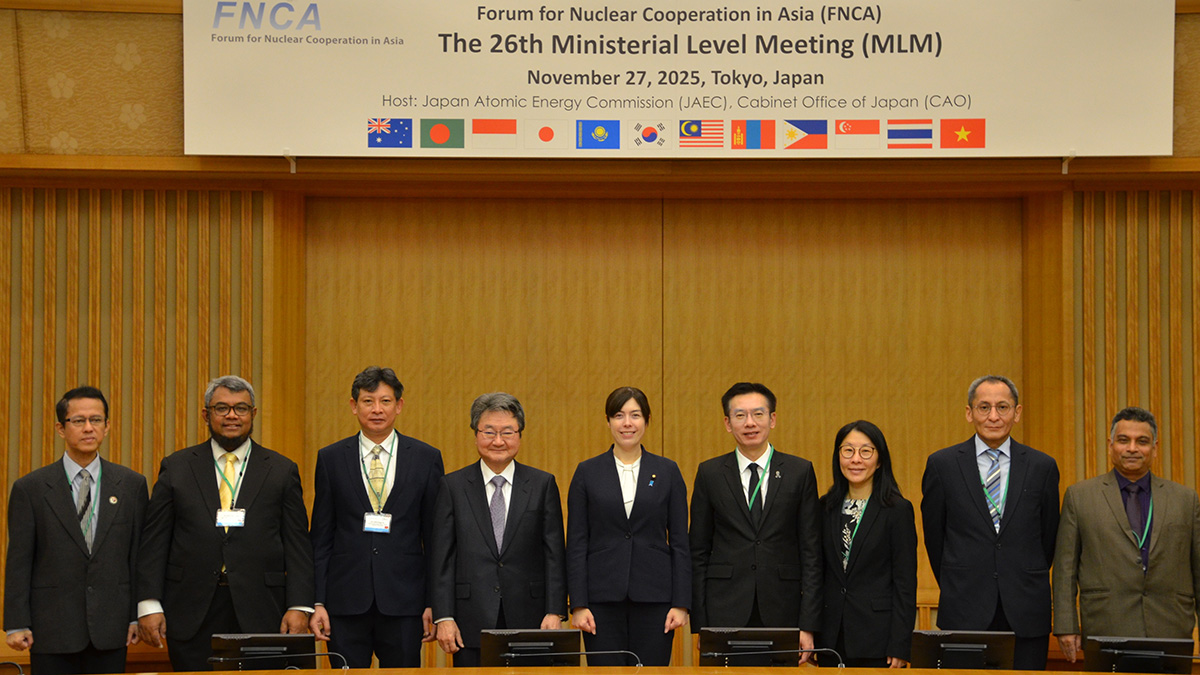
The Cabinet Office and the Japan Atomic Energy Commission (JAEC) held the 26th FNCA Ministerial Level Meeting (MLM) on November 27, 2025.
In recent years, there has been growing interest in applications of nuclear power technology in the energy field to address the expected increase in power demand, for building a low-carbon society and supporting a digital society in Asian countries. Against this background, Ministers and other officials overseeing the field of nuclear science and technology from FNCA member countries other than China gathered for policy discussions and related activities under the theme of “The Role of Nuclear Energy”.
At this meeting, Mr. William D. Magwood, Director-General of the Nuclear Energy Agency (NEA) of the Organization for Economic Cooperation and Development (OECD), delivered a keynote speech (video message) entitled “ The Role of Nuclear Energy in Asia” from a global perspective, and Mr. YASURAOKA Satoru, Director for International Affairs at Nuclear Energy Policy Division, Agency for Natural Resources and Energy (ANRE), delivered a keynote speech on the theme “Cooperation with Newcomer Countries” from Japan’s perspective. (Mr. YASURAOKA delivered the speech on behalf of Ms. UENO Asako, Deputy Commissioner for International Affairs).
Following the keynote speeches, representatives of each country presented country reports in two sessions. Subsequently, a Roundtable discussion was held on the main theme of this meeting, “The Role of Nuclear Energy,” featuring lead speeches made by Thailand and Indonesia.
Singapore was newly added as a member country in the Joint Communique. In addition, the Communique was finalized after the meeting, following confirmation by the member countries. (Program)(Participants List)
 |
| |
 |
(1) Opening
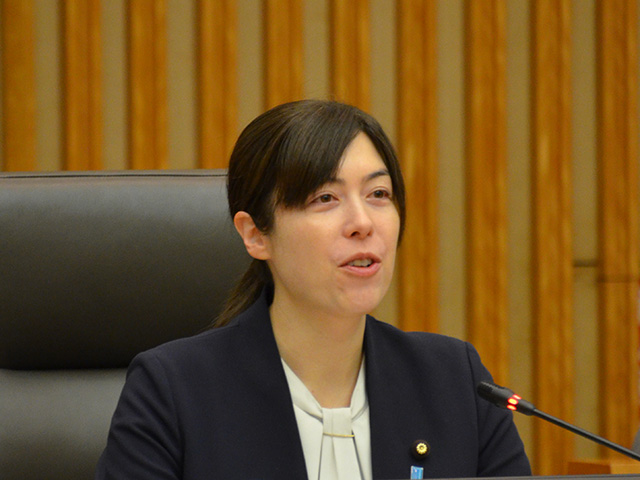 At the beginning of the meeting, Ms. ONODA Kimi, Minister of State for Science and Technology Policy, delivered welcome remarks. She indicated her expectations for a fruitful exchange of views in line with today’s theme, and for lively discussions of future initiatives based on a review of the FNCA’s activities over the past year. She also expressed her hope that the advancement and sharing of nuclear science and technology in the Asian region will contribute to the development of both the region and the world. At the beginning of the meeting, Ms. ONODA Kimi, Minister of State for Science and Technology Policy, delivered welcome remarks. She indicated her expectations for a fruitful exchange of views in line with today’s theme, and for lively discussions of future initiatives based on a review of the FNCA’s activities over the past year. She also expressed her hope that the advancement and sharing of nuclear science and technology in the Asian region will contribute to the development of both the region and the world. |
(2) Keynote Speech
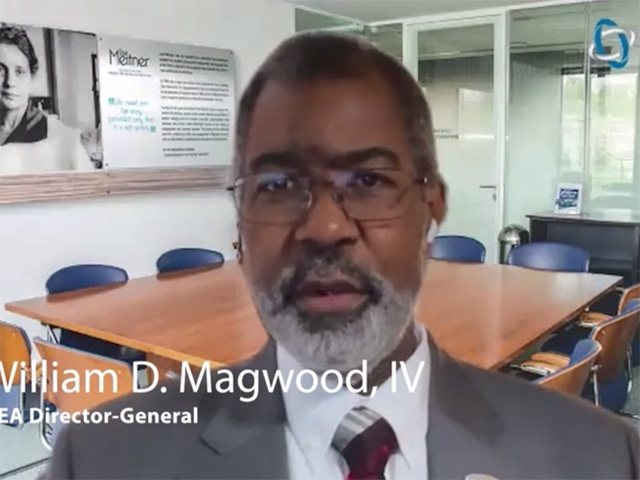
1) Mr. William D. Magwood, Director-General of the OECD/NEA: “The Role of Nuclear Energy in Asia”
Since many FNCA member countries are considering the introduction of nuclear power as newcomer countries, Mr. Magwood showcased advanced efforts in Europe. He explained topics such as the ongoing global development of technology for Generation IV reactors and small modular reactors (SMRs), associated issues and risks, human resource development and encouraging interest in the nuclear field among the young, and the importance of human capital. |
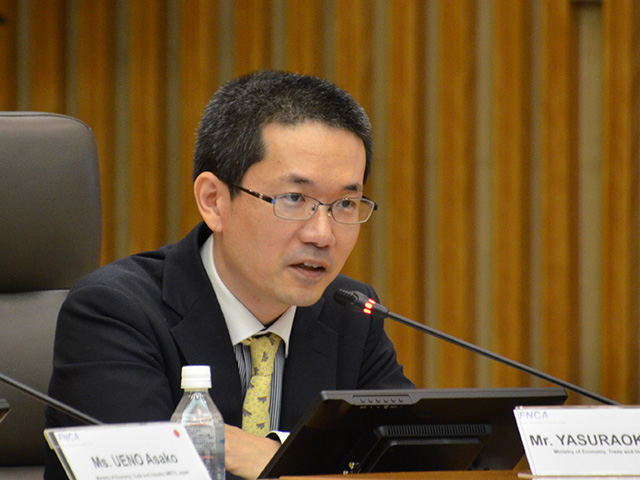 2) Mr. YASURAOKA Satoru, Director for International Affairs, Nuclear Energy Policy Division of the ANRE: “Cooperation with Newcomer Countries” 2) Mr. YASURAOKA Satoru, Director for International Affairs, Nuclear Energy Policy Division of the ANRE: “Cooperation with Newcomer Countries”
Mr. YASURAOKA explained Japan’s history and track record to date regarding nuclear power generation, and its current nuclear power policy. With Asian countries in mind, he highlighted the need for financial support, corporate cooperation in nuclear power projects, and collaboration with stakeholders. |
(3) Country Reports
Representatives of each country presented country reports in two sessions. The first session, as in previous MLM, featured reports on general trends in nuclear technology in each country from Australia, Bangladesh, Kazakhstan, Mongolia, Singapore, and Vietnam. At the following session, country reports focusing on ‘The Role of Nuclear Energy’ were presented by Malaysia, the Philippines, Japan, and the Republic of Korea. These reports provided information for the subsequent Roundtable Discussion, which prompted a lively exchange of views.
An overview of the country reports on Mongolia, Vietnam, and Malaysia is shown below.
- Mongolia
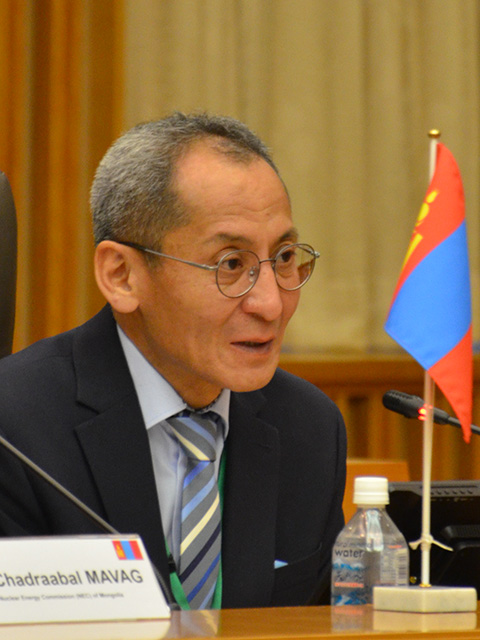 The legal and regulatory framework in Mongolia’s nuclear field is being developed based on the Long-Term Development Policy, “Vision 2050”, established in 2020, while nuclear-related infrastructure development is being implemented under the Government Action Plan for 2024-2028. Mongolia is currently advancing amendments to the Nuclear Energy Law, the establishment of the Nuclear Energy Agency, the establishment of a NEPIO (Nuclear Energy Programme Implementing Organization) to develop regulations and carry out planning activities for basic studies for the nuclear power program, and preparation for the uranium production. The legal and regulatory framework in Mongolia’s nuclear field is being developed based on the Long-Term Development Policy, “Vision 2050”, established in 2020, while nuclear-related infrastructure development is being implemented under the Government Action Plan for 2024-2028. Mongolia is currently advancing amendments to the Nuclear Energy Law, the establishment of the Nuclear Energy Agency, the establishment of a NEPIO (Nuclear Energy Programme Implementing Organization) to develop regulations and carry out planning activities for basic studies for the nuclear power program, and preparation for the uranium production.
- Vietnam
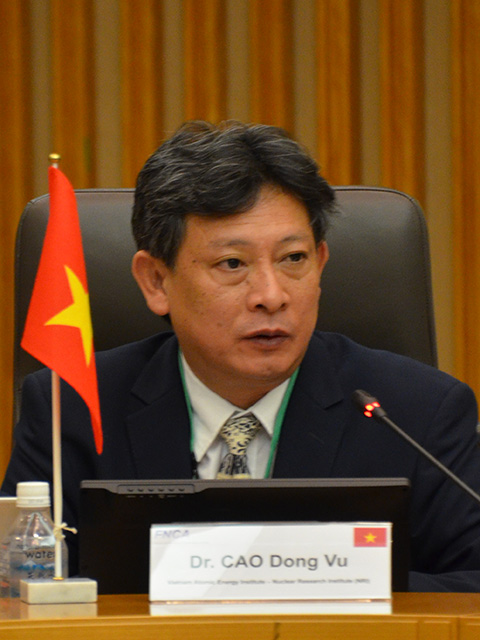 Vietnam’s nuclear power plant development projects were postponed in 2016 and approved for resumption in late 2024. The initial technology will focus on Generation III+ Advanced Light Water Reactors (ALWRs), with an expected capacity of 1,000 - 1,600 MWe. Besides, SMR technology has been identified as one of 11 strategic technologies for prioritized development in Vietnam. In addition, the Center for Nuclear Science and Technology (CNST) Project is also being implemented, including a Russian-supplied multipurpose research reactor to strengthen national nuclear capacity, human resource training in reactor physics and safety, and applications in medicine, semiconductors, and research. Vietnam’s nuclear power plant development projects were postponed in 2016 and approved for resumption in late 2024. The initial technology will focus on Generation III+ Advanced Light Water Reactors (ALWRs), with an expected capacity of 1,000 - 1,600 MWe. Besides, SMR technology has been identified as one of 11 strategic technologies for prioritized development in Vietnam. In addition, the Center for Nuclear Science and Technology (CNST) Project is also being implemented, including a Russian-supplied multipurpose research reactor to strengthen national nuclear capacity, human resource training in reactor physics and safety, and applications in medicine, semiconductors, and research.
- Malaysia
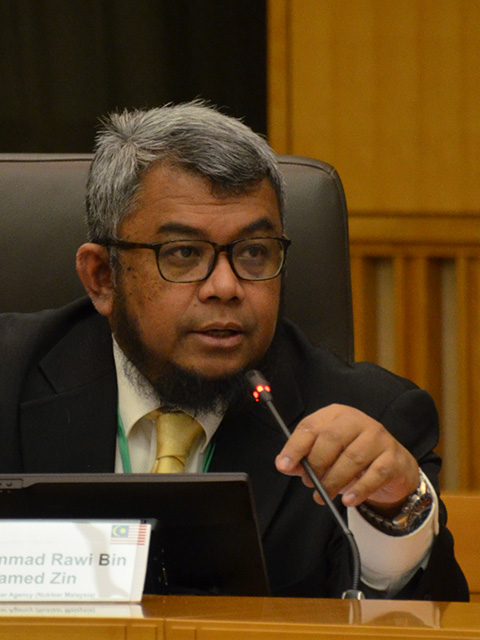 Via The Ministry of Energy Transition and Water Transformation (PETRA), Malaysia has the plan to achieve carbon neutrality by 2050 (Net Zero 2050), which includes the gradual phase-out of coal-fired power generation and the expansion of renewable energy in line with national targets. As coal is phased out and renewable energy penetration increases, Malaysia is assessing nuclear energy as a potential low-carbon option to support electricity generation, particularly to address future baseload power requirements and enhance grid stability.This consideration is aligned with the Government’s efforts to diversify the energy mix while ensuring reliable, sustainable, and low-carbon power generation. Via The Ministry of Energy Transition and Water Transformation (PETRA), Malaysia has the plan to achieve carbon neutrality by 2050 (Net Zero 2050), which includes the gradual phase-out of coal-fired power generation and the expansion of renewable energy in line with national targets. As coal is phased out and renewable energy penetration increases, Malaysia is assessing nuclear energy as a potential low-carbon option to support electricity generation, particularly to address future baseload power requirements and enhance grid stability.This consideration is aligned with the Government’s efforts to diversify the energy mix while ensuring reliable, sustainable, and low-carbon power generation.
(4) Roundtable Discussion
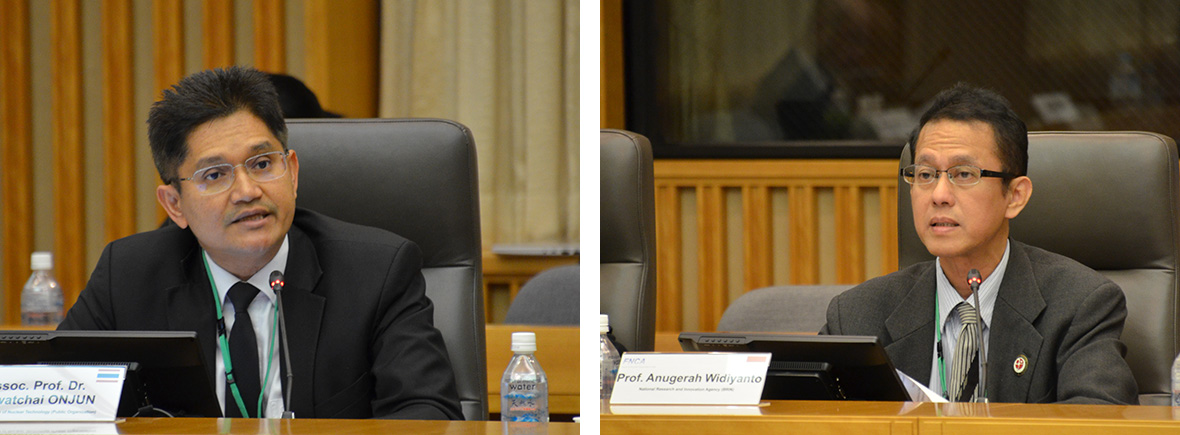
Chaired by Dr. UESAKA, to address the theme of “The Role of Nuclear Energy,” Dr. Thawatchai Onjun, Executive Director of the Thailand Institute of Nuclear Technology, and Dr. Anugerah Widiyanto, Acting Deputy for Development Policy, National Research and Innovation Agency (BRIN), Indonesia, gave lead speeches on their countries’ energy policies and efforts to introduce nuclear power. Then, there was an exchange of views based on the lead speeches and the country reports in the previous session.
During the discussion, there were a series of questions focusing particularly on developing and securing human resources, and the responses addressed topics such as: 1) approaches to encouraging interest in nuclear energy among younger generations and women; 2) the importance of construction planning and program development for securing workforce; and 3) IAEA education and training courses, and programs in Japan for developing technical leaders in the nuclear field, focusing on trainees from Asian countries. While technological preferences varied by country due to site conditions and the status of power grid infrastructure, it was found that, aside from Australia, the participating countries recognized the importance of nuclear power generation as a low-carbon energy option, although there were differences in degree of enthusiasm.
|
(5) FNCA Award Ceremony
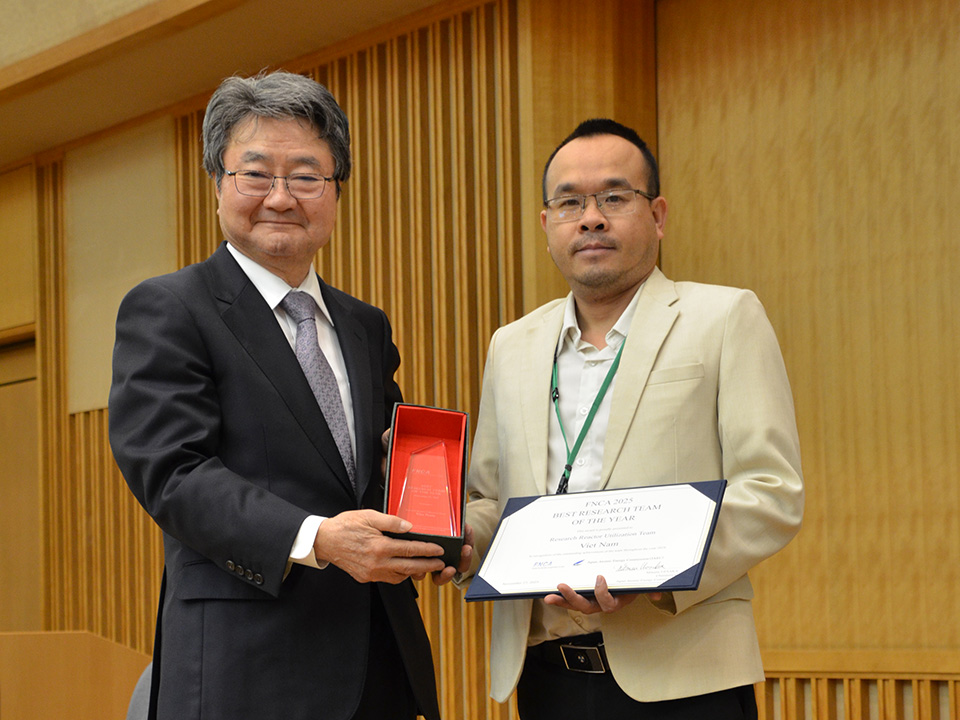
The FNCA Award Ceremony was held to celebrate research teams who have made outstanding achievements in FNCA project activities in fiscal year 2024. At the ceremony, the winning teams of the Best Research Team Award and Excellent Research Team Award were introduced.
The winner of the Best Research Team Award, Dr. Pham Thanh Minh (Dalat Nuclear Research Institute, Vietnam Atomic Energy Institute), from the Research Reactor Utilization Project in Vietnam, was presented with a trophy by Dr. UESAKA, and he gave a commemorative speech on behalf of the winning team from the Vietnam. |
(6) Reports for FNCA Activities
Dr. TAMADA Masao, FNCA coordinator of Japan, reported on the overview of the 25th Coordinators Meeting held in February 2025. In addition, the Secretariat explained the meeting schedule for FY2026, as well as the host countries and venues for the MLMs from 2026 onward. It was confirmed that the 27th MLM will be held in Japan and the 28th MLM will be held in the Republic of Korea. |
(7) Joint Communique
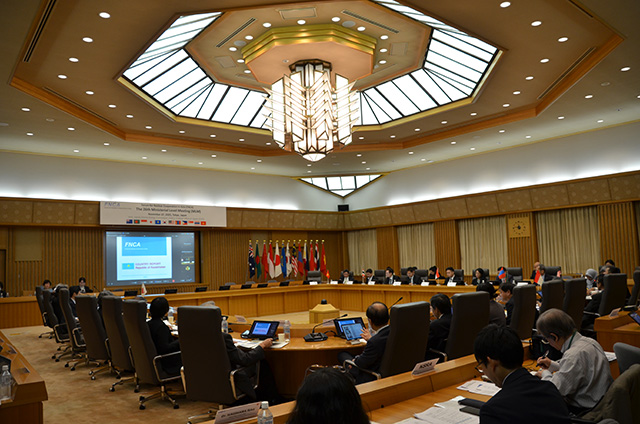
The draft Joint Communique (JC) states: 1) that information sharing on nuclear power generation, including next-generation reactors such as SMRs, as well as technical information exchange, will be promoted by holding in-person and online seminars and workshops; 2) that the FNCA Study Panel on public communication will be convened in February 2026; and 3) that the progress of the FNCA project activities in agriculture, industry, medicine and the environment is appreciated.
Singapore was newly added as a member country in the JC. Although Australia participated in meeting and expressed its intention to continue cooperating in FNCA activities, it was confirmed that Australia would not join the JC on this occasion due to its domestic political position. It was also confirmed that China, which decided not to participate immediately prior to the meeting, would not be included in the present JC. The draft was finalized after the meeting, following confirmation by the member countries.
(Full Text: Joint Communique) |
|
26th Ministerial Level Meeting
Program of the 26th FNCA Ministerial Meeting (MM)
November 27, 2025
Tokyo, Japan and Online
| Date : |
November 27, 2025 |
| Organized by : |
Japan Atomic Energy Commission (JAEC), Cabinet Office, Japan |
| 10:00-10:10 |
Group Photos |
| 10:10-10:40 |
Session I, Opening Session < Open to PRESS > |
| |
- Opening and Welcome Remarks
Dr. UESAKA Mitsuru, Chairperson of JAEC
H.E. Ms. ONODA Kimi, Minister of State for Science and Technology Policy, Japan
- Self-introduction of participants
- Confirmation of Agenda
|
| 10:40-11:20 |
Session II, Keynote Speech <Open to PRESS> |
| |
Keynote Speech 1.
Mr. William D. Magwood,
Director-General, OECD Nuclear Energy Agency (NEA)
Keynote Speech 2.
Ms. UENO Asako, Deputy Commissioner for International Affairs, Agency for Natural Resources and Energy |
| 11:20-12:30 |
Session III, Country Report highlighting “Nuclear Energy and Nuclear Science”
Status of nuclear energy (power) and nuclear science and application (non-power) |
| |
1.Australia, 2. Bangladesh, 3. Kazakhstan, 4. Mongolia, 5. Singapore, 6. Vietnam |
| 12:30-13:30 |
Lunch Break |
| 13:30-14:30 |
Session IV, Country Report highlighting “Role of Nuclear Energy” |
| |
1. Malaysia 2. Philippines, 3. Japan, 4. Korea |
| 14:30-15:30 |
Session V, Roundtable Discussion |
| |
“Role of Nuclear Energy”
- Thailand
- Indonesia
|
| 15:30-15:50 |
Break |
| 15:50-16:30 |
Session VI, FNCA Award Ceremony |
| 16:30-17:15 |
Session VII, General Discussion on FNCA Activities and Management |
| 16:30-17:15 |
- Report on the 25th CDM: Project Activities
- Announcement of the Meeting Schedule in 2026
- Location and Host Country of MLM in 2026 and Beyond
|
| 17:15-17:40 |
Session VIII, Discussion on the Joint Communique |
| 17:40-17:50 |
Session IX, Closing Session |
| |
Closing Remarks
Dr. UESAKA Mitsuru, Chairperson of JAEC |
|
The 26th Ministerial Level Meeting
List of the Participants in the 26th FNCA Ministerial Level Meeting (MLM)
| Australia |
Ms. Natascha Spark
Senior Manager, International Affairs
Australian Nuclear Science & Technology Organisation (ANSTO)
Ms. Dan Nicholls
Senior Advisor, International Affairs
Australian Nuclear Science & Technology Organisation (ANSTO)
Mr. Andrew Popp
Head Preparedness Response and Collaboration and Radiation Safety
Australian Nuclear Science & Technology Organisation (ANSTO)
Mr. Mihail Lonescue
Research Leader
Nuclear Fuel Cycle
Australian Nuclear Science & Technology Organisation (ANSTO)
Mr. Prashant Maharaj
Radiological Emergency Manager
Australian Nuclear Science & Technology Organisation (ANSTO) |
| Bangladesh |
Dr. M. Moinul Islam
Director
International Affairs Division
Bangladesh Atomic Energy Commission |
| Indonesia |
Prof. Anugerah Widiyanto
Acting Deputy Chairman for Development Policy
National Research and Innovation Agency (BRIN)
Mr. Dimas Irawan
Executive Director of International Nuclear Agency Indonesia
National Research and Innovation Agency (BRIN) |
| Kazakhstan |
Prof. Erlan Batyrbekov
Director General
National Nuclear Center of the Republic of Kazakhstan
Dr. Vladimir Vityuk
Deputy Director General for Science
RSE "National Nuclear Center of the Republic of Kazakhstan" |
| Republic of Korea |
Mr. Young Hooi HWANG
Director
Nuclear Energy Cooperation Division
Ministry of Science and ICT (MSIT)
Mr. Jaepyo HONG
Deputy Director
Nuclear Energy Cooperation Division
Ministry of Science and ICT (MSIT)
Ms. Minyeon KIM
Head, Technical Cooperation Division
Global Cooperation Center
Korea Nuclear International Cooperation Foundation (KONICOF)
Ms. Hongbi DO
Researcher
Global Cooperation Center
Korea Nuclear International Cooperation Foundation (KONICOF) |
| Malaysia |
Dr. Muhammad Rawi Bin Mohamed Zin
Director General
Malaysian Nuclear Agency (Nuklear Malaysia)
Ms. Siti Syarina Binti Mat Sali
Research Officer
Planning and International Relations Division
Malaysian Nuclear Agency (Nuklear Malaysia) |
| Mongolia |
Mr. Manlaijav Gunaajav
Secretary
Nuclear Energy Commission (NEC) of Mongolia
Mr. Chadraabal Mavag
Head of the Nuclear Technology Department
Executive Office of the Nuclear Energy Commission (NEC) of Mongolia |
| Singapore |
Ms. Koh Li-Na
Deputy Chief Executive Officer
Director-General of Meteorological Services and Radiation Protection
National Environment Agency
Mr. Tan Wei Han Gabriel
Executive Scientific Officer
National Environment Agency |
| The Philippines |
Mr. Neil Raymund Diaz Guillermo
Supervising Science Research Specialist
DOST-Philippine Nuclear Research Institute (PNRI) |
| Thailand |
Mr. Suphachai Pathumnakul
Permanent Secretary of Higher Education, Science, Research and Innovation
Dr. Thawatchai Onjun
Executive Director
Thailand Institute of Nuclear Technology (Public Organization)
Dr. Nopporn Poolyarat
Head of Nuclear Fusion and Plasma
Thailand Institute of Nuclear Technology (Public Organization)
Ms. Tiraprapa Ratanachoti
Plan and Policy Analyst, Senior Professional Level
Ministry of Higher Education Science Research and Innovation
Ms. Chatchawan Mansaithong
International Cooperation Officer
Thailand Institute of Nuclear Technology (Public Organization) |
| Vietnam |
Dr. CAO Dong Vu
Director of NRI
Vietnam Atomic Energy Institute - Nuclear Research Institute (NRI)
Dr. PHAM Thanh Minh
Director of the Center for Research and Production of Radioisotope
Vietnam Atomic Energy Institute - Nuclear Research Institute (NRI)
Ms. TRAN Ngoc Hoan
Deputy Director
Department of International Cooperation
Vietnam Atomic Energy Institute (VINATOM)
Ms. PHAM Thanh Huong
Official
Department of International Cooperation
Vietnam Atomic Energy Institute (VINATOM) |
| OECD/NEA |
Mr. William D. Magwood, IV
Director-General, Nuclear Energy Agency (NEA) |
| Japan |
Ms. ONODA Kimi
Minister, CAO
Mr. TATEMATSU Shinya
Secretary to the Minister, CAO
Dr. TAMADA Masao
FNCA Coordinator of Japan
Mr. WADA Tomoaki
FNCA Advisor of Japan
Mr. MORIMOTO Koichi
FNCA Advisor of Japan
Ms. ABE Yukiko
Director for International Nuclear Cooperation
Research and Development Bureau
Ministry of Education, Culture, Sports, Science and Technology (MEXT)
Dr. IKEJIRI Satoshi
Deputy Director
International Nuclear and Fusion Energy Affairs Division
Research and Development Bureau
Ministry of Education, Culture, Sports, Science and Technology (MEXT)
Mr. AOYAMA Yuichi
Unit Chief
International Nuclear and Fusion Energy Affairs Division
Research and Development Bureau
Ministry of Education, Culture, Sports, Science and Technology (MEXT)
Mr. NAKAJIMA Shogo
Researcher
International Nuclear and Fusion Energy Affairs Division
Research and Development Bureau
Ministry of Education Culture, Sports, Science and Technology (MEXT)
Mr. TANAKA Kenichiro
Director
International Nuclear Cooperation Division
Disarmament, Non-Proliferation and Science Department
Ministry of Foreign Affairs (MOFA) of Japan
Mr. ITO Masaki
Researcher
International Nuclear Cooperation Division
Disarmament, Non-Proliferation and Science Department
Ministry of Foreign Affairs (MOFA)
Ms. UENO Asako
Deputy Commissioner for International Affairs
Agency for Natural Resources and Energy
Ministry of Economy, Trade and Industry (METI), Japan
Mr. YASURAOKA Satoru
Director for International Affairs at Nuclear Energy Policy Division
Agency for Natural Resources and Energy
Ministry of Economy, Trade and Industry (METI), Japan
Mr. KAWAMURA Takayuki
Deputy Director
Office for International Nuclear Energy Cooperation
Nuclear Energy Policy Planning Division
Agency for Natural Resources and Energy
Mr. ABE Eimitsu
Deputy Director
Office for International Nuclear Energy Cooperation
Nuclear Energy Policy Planning Division
Agency for Natural Resources and Energy
Dr. UESAKA Mitsuru
Chairperson
Japan Atomic Energy Commission (JAEC)
Mr. NAOI Yosuke
Commissioner
Japan Atomic Energy Commission (JAEC)
Dr. YOSHIHASHI Sachiko
Commissioner
Japan Atomic Energy Commission (JAEC)
Dr. TSUNETO Akira
Deputy Director General for Science, Technology and Innovation Policy
Cabinet Office of Japan (CAO)
Dr. IDE Taro
Director for Atomic Energy and International Affairs
Bureau of Science, Technology and Innovation
Cabinet Office of Japan (CAO)
Mr. SHUZUI Yoshiyuki
Deputy-Director
Office for Atomic Energy Policy
Secretariat of the Atomic Energy Commission
Cabinet Office of Japan (CAO)
Ms. OTAGIRI Kayoko
Chief of International Affairs Section
Secretariat of the Atomic Energy Commission
Cabinet Office of Japan (CAO)
Mr. EGAWA Hirokazu
Technical Counsellor
Office for Atomic Energy Policy
Secretariat of the Atomic Energy Commission
Cabinet Office of Japan (CAO)
Ms. KUROGI Rie
Senior Researcher
Office for Atomic Energy Policy
Secretariat of the Atomic Energy Commission
Cabinet Office of Japan (CAO)
Dr. HAGIHARA Rika
Senior Researcher
Office for Atomic Energy Policy
Secretariat of the Atomic Energy Commission
Cabinet Office of Japan (CAO)
Mr. NAKAMURA Kiyoshi
Senior Researcher
Office for Atomic Energy Policy
Secretariat of the Atomic Energy Commission
Cabinet Office of Japan (CAO)
Ms. KOIZUMI Madoka
Director, International Affairs Department
Japan Atomic Energy Agency (JAEA) |
|
|